.png)
Repeated Cardioversions or Catheter Ablation: Which Is the Better Treatment for Atrial Fibrillation?
- alison0881
- Jul 27
- 4 min read
If you've been living with atrial fibrillation (AFib), you may have asked yourself:
"Should I keep having cardioversions, or is it time to consider catheter ablation?"
It's one of the most common questions Professor Malcolm Finlay hears in clinic.
The answer has changed dramatically over the past two decades.
Thanks to major advances in technology, catheter ablation has become safer, quicker and more effective than ever before, meaning many patients are now offered ablation much earlier in their treatment journey.
Key Takeaways
Cardioversion restores a normal heart rhythm but does not treat the underlying cause of atrial fibrillation.
AF often returns after cardioversion, especially without additional treatment.
Modern catheter ablation aims to treat the source of AF, offering a more durable solution.
Pulse Field Ablation (PFA) has made AF ablation safer, faster and less invasive.
Cardioversion still has an important role in diagnosing symptoms and stabilising some patients.
Repeated cardioversions may be a sign that it's time to discuss catheter ablation with a heart rhythm specialist.
The best treatment depends on your symptoms, heart health and individual circumstances.
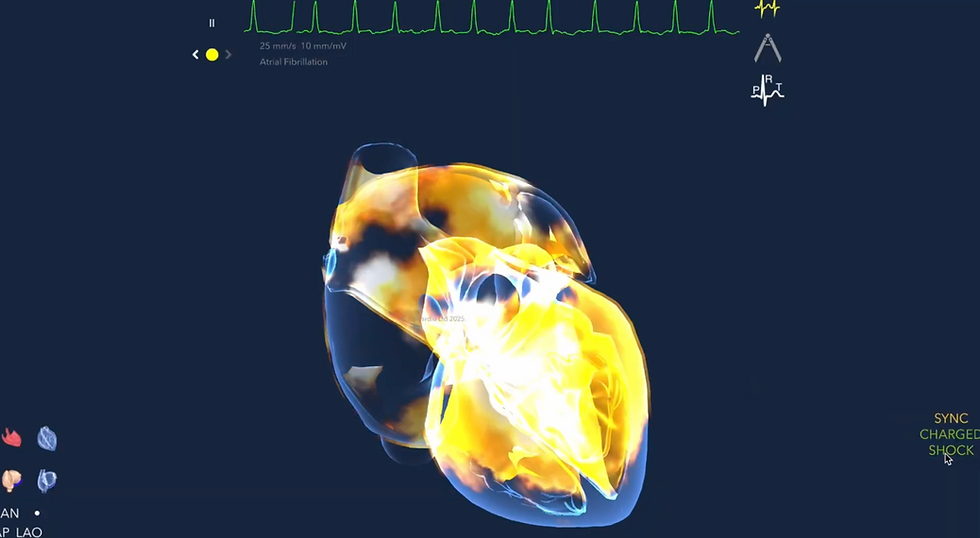
How Has AF Ablation Changed?
Twenty years ago, catheter ablation was a very different procedure.
Patients often:
stayed in hospital for several days
underwent lengthy procedures lasting four to five hours
recovered more slowly
required prolonged bed rest after treatment
Today, modern AF ablation is considerably less invasive.
What is recovery like now?
For many patients having their first catheter ablation, particularly using Pulse Field Ablation (PFA):
treatment is often completed within a few hours
patients usually walk the same day
most return home the same day
many resume normal activities within days
some return to sport within around 10 days
Advances in technology have also significantly improved the safety profile of catheter ablation.
What Does Cardioversion Do?
What is electrical cardioversion?
Cardioversion uses a carefully timed electrical shock to restore the heart to a normal rhythm.
It is extremely effective at achieving one important goal:
Restoring sinus rhythm immediately.
However, cardioversion does not remove the underlying cause of atrial fibrillation.
Why Does AF Often Return After Cardioversion?
One of the biggest limitations of cardioversion is that it acts like a reset button rather than a cure.
Does cardioversion prevent AF from returning?
Unfortunately, no.
For most patients:
AF gradually returns
recurrence commonly occurs within the first year
anti-arrhythmic medication may delay recurrence but cannot always prevent it
Even powerful medications such as amiodarone carry significant long-term side effects and do not completely eliminate recurrence.
Cardioversion also does not reduce your long-term stroke risk or permanently cure atrial fibrillation.
How Is Catheter Ablation Different?
Rather than simply restoring normal rhythm, catheter ablation aims to treat one of the main causes of atrial fibrillation.
How does AF ablation work?
In most patients, abnormal electrical signals begin inside the pulmonary veins at the back of the heart.
During catheter ablation, these veins are electrically isolated, preventing the abnormal signals from triggering atrial fibrillation.
The goal is to provide a much more durable solution than repeated cardioversions alone.
Does Cardioversion Still Have a Role?
Absolutely.
Although catheter ablation has become increasingly important, cardioversion remains extremely valuable in several situations.
1. Understanding Your Symptoms
Many patients believe their AF doesn't bother them very much.
However, after a successful cardioversion, they often discover just how much better they feel in normal rhythm.
Patients frequently realise that symptoms they had blamed on ageing were actually caused by atrial fibrillation, including:
tiredness
breathlessness
reduced exercise capacity
lack of energy
Cardioversion can therefore help determine whether long-term rhythm control is likely to improve quality of life.
2. Patients With Heart Failure
When atrial fibrillation contributes to heart failure, restoring normal rhythm quickly can stabilise the heart.
A cardioversion may:
improve heart function
relieve symptoms
allow time to plan catheter ablation under more controlled circumstances
3. After AF Ablation
Cardioversion also has an important role after catheter ablation.
Can AF return during healing?
Yes.
During the first few months after an ablation, temporary episodes of atrial fibrillation are relatively common while the heart heals.
Rather than rushing into another ablation procedure, a simple cardioversion may restore normal rhythm while healing continues.
When Should You Consider Catheter Ablation?
Professor Malcolm Finlay believes modern catheter ablation has become the treatment to beat for many suitable patients requiring rhythm control.
Why consider AF ablation earlier?
Compared with repeated cardioversions, catheter ablation offers:
a greater chance of maintaining normal rhythm
improved quality of life
better symptom control
fewer repeated hospital procedures
less reliance on long-term anti-arrhythmic medication
While treatment guidelines continue to evolve, growing evidence supports earlier referral for catheter ablation in carefully selected patients.
Is Catheter Ablation Right for Everyone?
No.
The decision depends on several factors, including:
symptom severity
overall health
age
type of atrial fibrillation
patient preferences
underlying heart disease
Every treatment plan should be individualised following assessment by an experienced consultant cardiologist or cardiac electrophysiologist.
Should You Keep Having Cardioversions?
If you've already undergone:
a second cardioversion
a third cardioversion
or even more
it may be time to ask an important question:
"Would catheter ablation offer me a better long-term solution?"
For many patients, discussing this with a heart rhythm specialist is an important next step.
Frequently Asked Questions
Is catheter ablation better than cardioversion?
Catheter ablation aims to treat the underlying cause of atrial fibrillation, while cardioversion simply restores normal rhythm temporarily.
Does cardioversion cure AF?
No. Cardioversion resets the heart rhythm but does not prevent atrial fibrillation from returning.
Why does AF come back after cardioversion?
Because the electrical triggers responsible for AF remain present after the procedure.
When is cardioversion still useful?
Cardioversion remains valuable for diagnosing symptom improvement, stabilising patients with heart failure and treating temporary AF recurrence after catheter ablation.
Is Pulse Field Ablation safer?
Pulse Field Ablation has significantly improved the safety profile of catheter ablation and has become an important advance in AF treatment.
Should I consider ablation after multiple cardioversions?
If AF continues to return despite repeated cardioversions, discussing catheter ablation with your electrophysiologist is often worthwhile.
If you're wondering whether repeated cardioversions are still the right approach or whether catheter ablation may offer a more lasting solution, Professor Malcolm Finlay provides expert assessment and personalised treatment plans for patients living with atrial fibrillation.
Every patient is different, and the best treatment depends on your symptoms, overall health and personal goals.
Website: https://www.drmalcolmfinlay.com/
Telephone: 0207 183 0514
Email: pa@drmalcolmfinlay.com


Comments